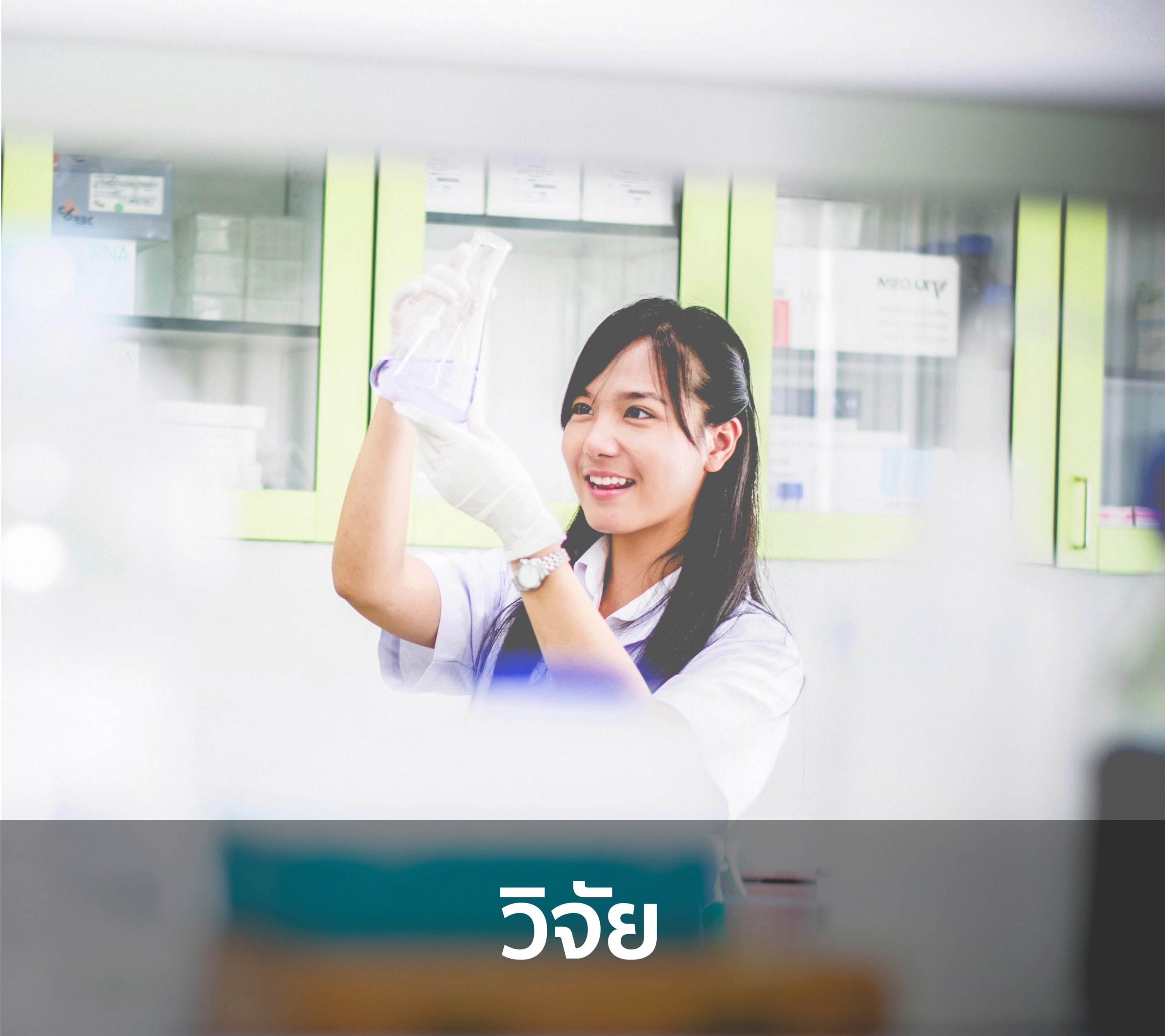

As Chiang Mai University aims to be academic excellent through research, members of the medical faculty are obliged to do research. Research covers all aspects of health including basic, applied and clinical research. Cooperation and collaboration are encouraged between clinical faculty and faculty in the basic sciences, or even academic and research institutes in Thailand. Funds are available from the Faculty as well as from the donation such as the Professor Dr Wada Cancer Research Fund, and the Professor Nath Bhamarapravati Miniresearch Fund. Extramural grants which usually provide bigger amount of funding are available from granting agencies such as the National Research Council of Thailand (NRCT), the Thailand Research Fund (TRF), National Health Foundation and the National Science and Technology Development Agency (NSTDA), National Health Foundation and Health System Research Institute. Funds are awarded on a competitive basis. In addition several researchers have grants from international organizations such as WHO as well as those in the USA, Europe, and Japan. Research collaboration with foreign researchers exists. As most of research involve human, they are subjected to approval by the faculty's Research Ethics Committee to ensure the protection of research participants.
Publication from the faculty appears in MEDLINE around 100 titles each year. Several staff received national award in recognition for excellence in research. Dissemination of knowledge through presentation in an international conference is done by staff regularly and some research activities result in patent products.

MEDICAL SCIENCE RESEARCH EQUIPMENT CENTER
To promote research activities, the Medical Science Research Equipment Center was founded. It occupies the entire fifth floor of the Graduate Study Building and has acquired much expensive and sophisticated equipment necessary for research. This equipment is available for use by graduate students and faculty members from various departments upon request. The center is divided into five sections: the Electron Microscopy Unit, the Molecular Biology Unit, the Analytical Equipment Unit, the Radioisotope Equipment Unit, and the Cell Biology Unit. Examples of some equipment are transmission and scanning electron microscopes, an ultracentrifuge, an atomic absorption spectrophotometer, a fluorescence activated cell sorter, DNA thermal cyclers, and an automatic DNA sequencer. The new equipment is bought into the center every year.


| Faculty Home Page |